
Mobility
Half the region: how the UAE became the Middle East's EV leader, and what it signals next
The UAE has taken roughly half of all Middle East electric-vehicle sales for the second year in a row. The interesting question is not how it got there — it is what the country is set up to capture next.
On the International Energy Agency's latest reading, the UAE accounted for close to 50 per cent of all electric-vehicle sales across the Middle East — placing the country first in the region for the second consecutive year. In a market as fragmented as Gulf and wider regional automotive, a single jurisdiction taking half of total EV demand is not a marketing line. It is a structural position.
We think the more interesting question is the second-order one. The UAE did not stumble into this. It is the predictable output of a policy stack, a charging-infrastructure programme, an energy strategy and a consumer base that have been deliberately aligned over several years. What that alignment now sets up is the basis for the next two phases — fleet electrification and domestic value-chain capture.
“The report confirms the UAE's success in creating an attractive environment for electric vehicle manufacturers and expanding their presence in the local market, supported by advanced legislation and world-class infrastructure.”
What the policy stack actually does
The framework underneath the headline figure is more carefully built than it usually gets credit for. The National Electric Vehicles Policy, launched in 2023, sits inside the broader UAE Energy Strategy 2050 and the Net Zero by 2050 Strategic Initiative. The UAEV nationwide charging network connects the policy to physical infrastructure rollout. None of these initiatives are large on their own; what is unusual is that they pull in the same direction, on the same timetable, with consistent funding behind them.
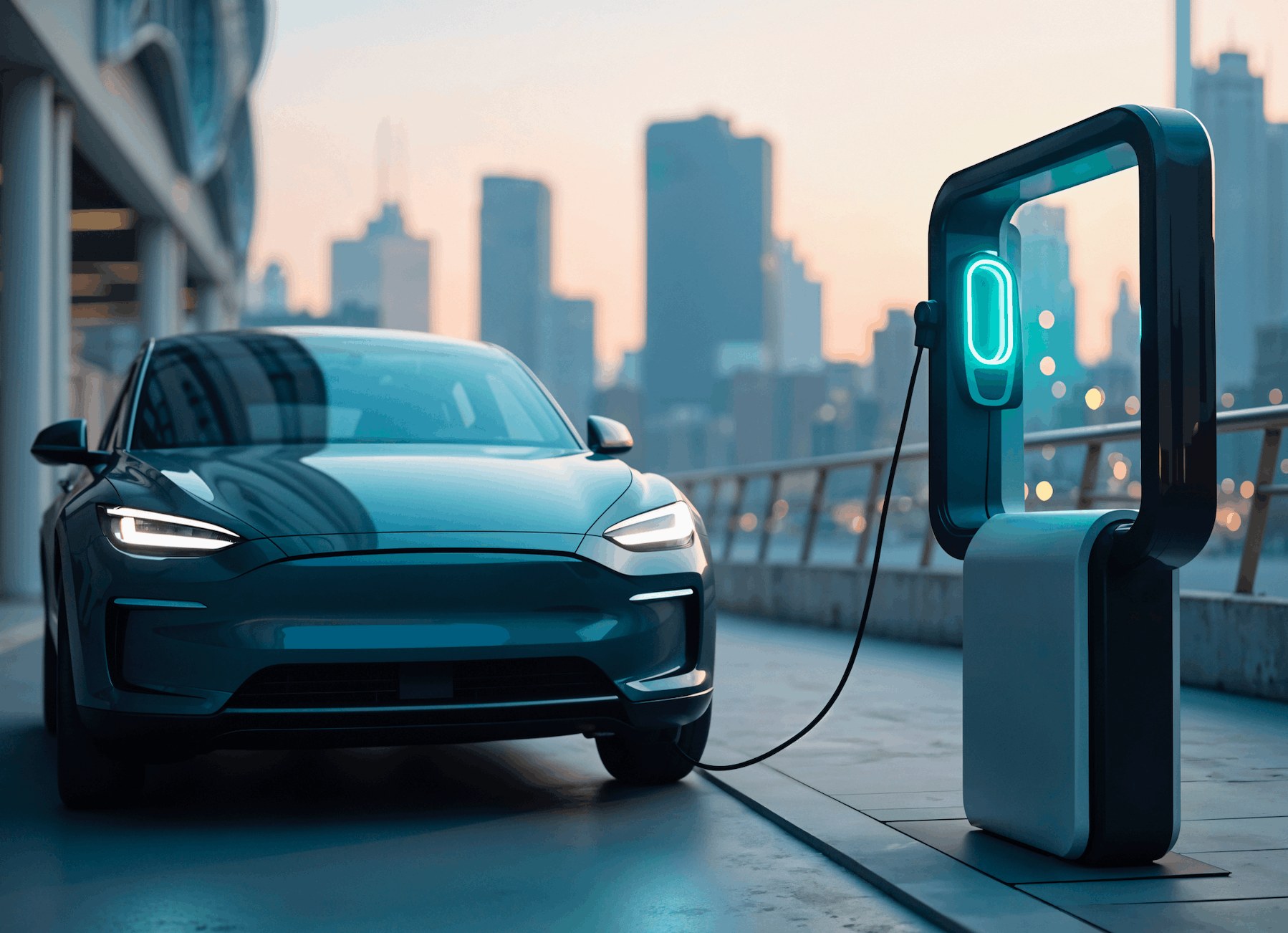
Dubai alone now has more than 1,860 publicly accessible charging points — a density that has moved past the threshold at which range anxiety stops being a meaningful barrier to a first-time EV buyer. Once a city crosses that threshold, adoption stops being driven by environmentally minded early adopters and starts being driven by the ordinary economics of fuel cost per kilometre.
“This achievement reflects the success of national policies and strategies that have strengthened the country's readiness to embrace global transformations in the electric vehicle sector.”
Where the next leg of value sits
Two adjacent opportunities are now in play. The first is fleet — taxis, ride-hailing, last-mile logistics, public transport and government vehicles — where total cost of ownership beats internal combustion comfortably at current charging cost. Fleet conversion at scale is essentially a financing problem with a very predictable payback profile, and the UAE has the capital depth to underwrite it.
The second is value-chain capture: battery assembly, components, software and services. Capturing the vehicle sale is the most visible layer of the EV market, but it is not the most profitable. Anchoring a meaningful share of battery and module assembly, charging-hardware manufacturing, and software-defined-vehicle services is what turns a strong consumer-adoption story into a durable industrial position.
Reading the numbers
- Approximately 50 per cent share of total Middle East EV sales held by the UAE.
- Number-one regional position for the second consecutive year, per IEA Global EV Outlook 2026.
- 1,860+ publicly accessible charging points in Dubai alone — well above the regional average.
- National Electric Vehicles Policy in place since 2023, anchoring the federal framework.
- UAEV charging network providing the physical layer underneath the policy commitments.
“The Ministry of Energy and Infrastructure, in collaboration with its partners from the public and private sectors, continues to accelerate the development of an integrated ecosystem to support the expansion of electric vehicles.”
Our reading
It is easy to read a single year's market-share figure and treat it as a vanity statistic. We do not. The combination of policy continuity, charging-density inflection, fleet upside and a credible path to domestic value-chain participation is, in our view, one of the cleaner industrial-strategy stories in the region right now. The interesting investment exposure here is no longer the carmakers themselves. It is the infrastructure underneath them — the chargers, the grid upgrades, the financing vehicles and the software layer that will define the next five years of the transition.
Topics