Real Estate
Dubai's free zones hit 96 percent occupancy, so it's building more
Occupancy across Dubai's three integrated economic zones hit 96 percent in the first half of the year, with the company count up 13 percent and headcount up 24 percent. The zones are responding by building rather than waiting, and the investment arm attached to them is now the busiest venture backer in the country.
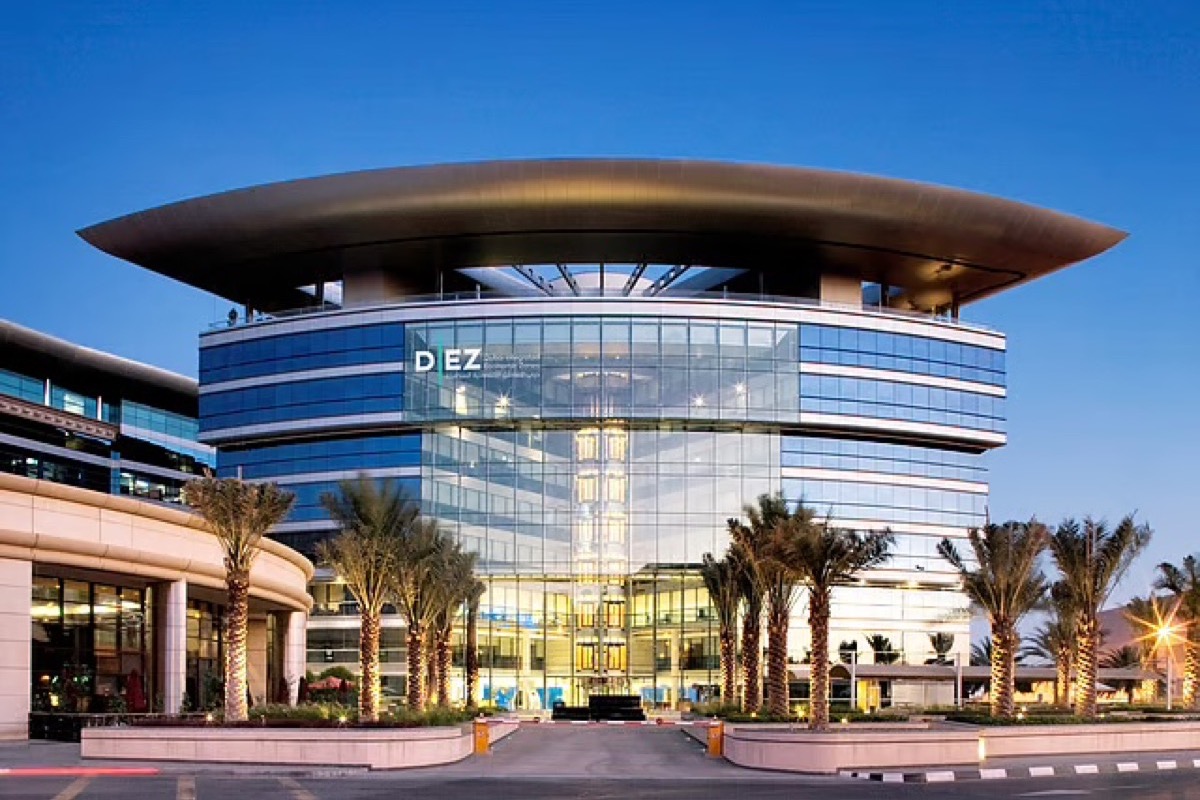
The Dubai Integrated Economic Zones Authority closed the first half of the year with occupancy at 96 percent across its three zones, Dubai Airport Freezone, Dubai Silicon Oasis and Dubai CommerCity. The number of companies operating inside them rose 13 percent from a year earlier, and the combined workforce grew 24 percent over the same stretch. A free zone running near full occupancy is not unusual on its own, but the response to it is worth attention: rather than let space tighten and rents do the rationing, the authority is pouring billions into new capacity while its investment arm accelerates funding into the startups that will eventually need somewhere to sit.
Building ahead of the squeeze
Two projects at Dubai Silicon Oasis illustrate the scale of the response. District IO, a technology infrastructure development, is backed by an investment of AED 11 billion. Block 14, a mixed use community aligned with the Dubai 2040 Urban Master Plan and due for completion in 2029, carries a first phase investment of AED 1.8 billion. Building a mixed use residential and commercial district years ahead of when the current space runs out is a bet that the current demand curve holds, and given where occupancy already sits, that bet looks closer to a formality than a gamble.
- Occupancy across Dubai Airport Freezone, Dubai Silicon Oasis and Dubai CommerCity reached 96 percent in H1 2026.
- Company numbers across the three zones rose 13 percent year on year.
- Combined workforce grew 24 percent compared with H1 2025.
- District IO at Dubai Silicon Oasis is backed by an AED 11 billion investment.
- Block 14's first phase carries an AED 1.8 billion investment, targeting completion in 2029.
- New company registrations at the Dubai Technology Entrepreneur Campus climbed 57 percent, with AI focused registrations up 95 percent.
The venture arm is the leading indicator
The more telling number sits inside Oraseya Capital, DIEZ's investment arm, which backed 15 startups in the first half of the year, a 25 percent increase in new investments over the same period last year. It received 771 applications for the eighth cohort of its Sandbox programme and selected 16 companies, and it has now ranked as the most active investor in the UAE by deal count for a third straight year. Recent additions to its portfolio include Takeem, a proptech platform built around rent guarantees, and Revora, an AI powered e-commerce platform aimed at GCC markets. An occupancy rate is a snapshot of demand that already exists. A venture arm accelerating its check count is a bet on the demand that has not shown up yet, and DIEZ is running both at once.
“The results reflect the resilience of the Authority's economic model and growing investor confidence in Dubai's business environment.”
The Dubai Technology Entrepreneur Campus, DIEZ's dedicated startup hub, backs up the same story from a different angle. New company registrations there climbed 57 percent year on year, and registrations from artificial intelligence specialised companies nearly doubled, up 95 percent. That is not broad based growth across every sector equally, it is a concentration of new formation in exactly the category of company that tends to need flexible space early and expand fast once it works, which is the kind of tenant a zone wants filling the gap left by its expansion plans.
Our reading
Three things stand out. First, 96 percent occupancy paired with double digit growth in both company count and headcount means the zones are not simply full, they are still absorbing new tenants faster than space can comfortably hold them, which is the strongest possible argument for the billions committed to District IO and Block 14. Second, running the venture arm harder at the same time the physical footprint is expanding is not a coincidence, it is a coordinated bet that funds the next generation of tenants before the buildings meant to house them are finished. Third, the concentration of growth in AI specialised registrations at Dtec suggests DIEZ is not just building more space, it is building for a specific kind of company, and positioning its zones to capture that category early rather than compete for it later once the sector has matured elsewhere. We read the 96 percent figure less as a capacity problem and more as confirmation that the expansion plan was already the right call before the first shovel went into the ground.
Topics