Partnerships
The EU's top tourism official just picked a side on Dubai
The EU's Commissioner for Sustainable Transport and Tourism flew to Dubai this week, sat down with the UAE's economy minister and both national carriers, and delivered a message that went well beyond the usual diplomatic language. With the EU already supplying a fifth of Dubai's visitors, the timing of the visit was not incidental.
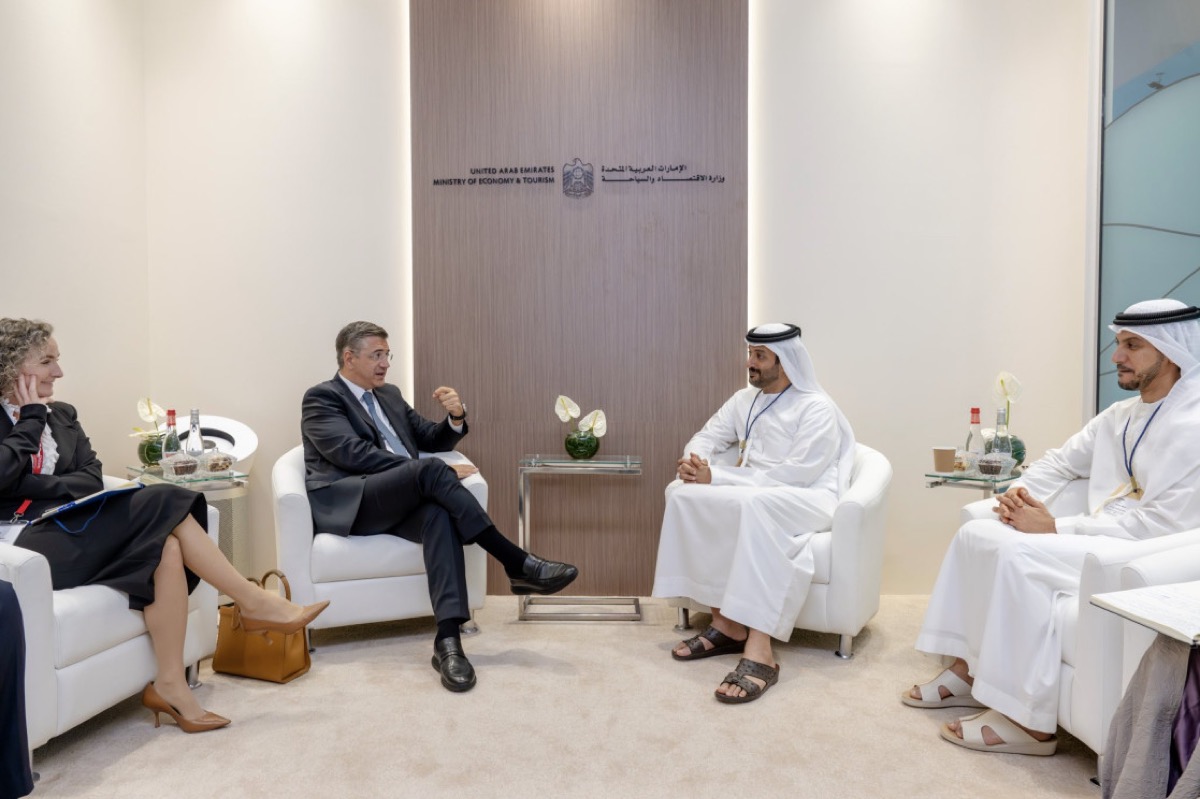
Apostolos Tzitzikostas, the European Union's Commissioner for Sustainable Transport and Tourism, travelled to Dubai this week for the Arabian Travel Market and used the trip to make a point that went beyond the usual courtesy of a trade show appearance. He met UAE Minister of Economy and Tourism Abdulla Bin Touq Al Marri, sat down separately with the leadership of both Emirates and Etihad, and took the Global Stage to tell the room, plainly, that Brussels views the Gulf as more than a market to court.
Why the timing was not an accident
Dubai's tourism sector has spent the past several months absorbing the effects of a regional war that cut visitor arrivals well below their usual pace, a slowdown covered in detail elsewhere on this site. The EU's commissioner arriving in the middle of that recovery, rather than waiting for calmer conditions, is itself a signal. The European Union already accounts for more than 20 percent of visitors to Dubai on its own, making it one of the single largest source markets the city has, which gives Brussels real standing to speak on the topic and real incentive to see the recovery succeed quickly.
“The European Union stands by its friends, its allies and its partners, and for us, the UAE and Gulf countries are indeed partners and allies. I'm here to support you in this difficult time. I'm happy to see that this difficult time is almost over, that the numbers are showing us that there is a turnaround, and that we are going back on track.”
What actually got discussed
Beyond the public messaging, the substance of the visit centred on connectivity, the airline capacity and route networks that determine how many Europeans can physically reach the UAE, alongside sustainable tourism practices and closer coordination between EU and UAE tourism bodies. Meeting Emirates and Etihad leadership directly rather than only the ministry puts the connectivity conversation in the hands of the two carriers actually flying the routes, which matters more to visitor numbers over the next year than any joint statement on cooperation. The commissioner also toured the European Pavilions at the event, where individual EU member states were showcasing their own tourism offerings, a reminder that this relationship runs in both directions rather than only pulling European visitors toward the Gulf.
- The EU supplies more than 20 percent of Dubai's total visitors, one of its largest source markets.
- Commissioner Tzitzikostas met UAE Minister Abdulla Bin Touq Al Marri during Arabian Travel Market 2026.
- Separate meetings were held with the leadership of both Emirates and Etihad Airways.
- The same week, the UAE held parallel tourism talks with Bahrain and Uzbekistan.
- Discussions covered connectivity, sustainable tourism practices and closer EU-UAE cooperation.
Part of a wider courtship
The EU meeting did not happen in isolation. In the same window at Arabian Travel Market, UAE Minister Bin Touq Al Marri also held separate talks with Bahrain's tourism minister and the head of Uzbekistan's tourism committee, each aimed at expanding bilateral visitor flows and sharing industry practices. Seen together, the pattern is a ministry working through its major source markets and partner destinations one meeting at a time during the one week of the year when most of them are already in the same building. The EU conversation stands out mainly for its scale and for the fact that the counterpart making the trip was a sitting European Commissioner rather than a ministry official.
Our reading
Three things stand out. First, the language the commissioner used, calling the UAE and Gulf states allies rather than simply markets or partners, is a stronger diplomatic register than tourism officials typically reach for, and it reads as Brussels positioning itself deliberately at a moment when the UAE's recovery narrative is still being written. Second, going directly to Emirates and Etihad rather than routing everything through the ministry shows the EU understands that visitor numbers are downstream of seat capacity, and that the airlines, not the diplomats, control the variable that matters most in the next two quarters. Third, the UAE running EU, Bahrain and Uzbekistan meetings in parallel during the same event suggests a deliberate strategy of using ATM's concentration of global tourism leadership to compress a year's worth of bilateral diplomacy into a single week. We read the visit less as a symbolic gesture and more as the EU quietly locking in its position as Dubai's tourism recovery gathers pace, rather than waiting to react once the numbers have already turned.
Topics