Finance
Dubai's financial hub kept expanding through the war, and the numbers explain why
Even with a regional conflict overhead, global banks and hedge funds kept leasing space in Dubai. Prime office rents rose more than 17 percent in the first quarter while vacancy stayed near zero, a sign of how deep the city's pull on capital has become.
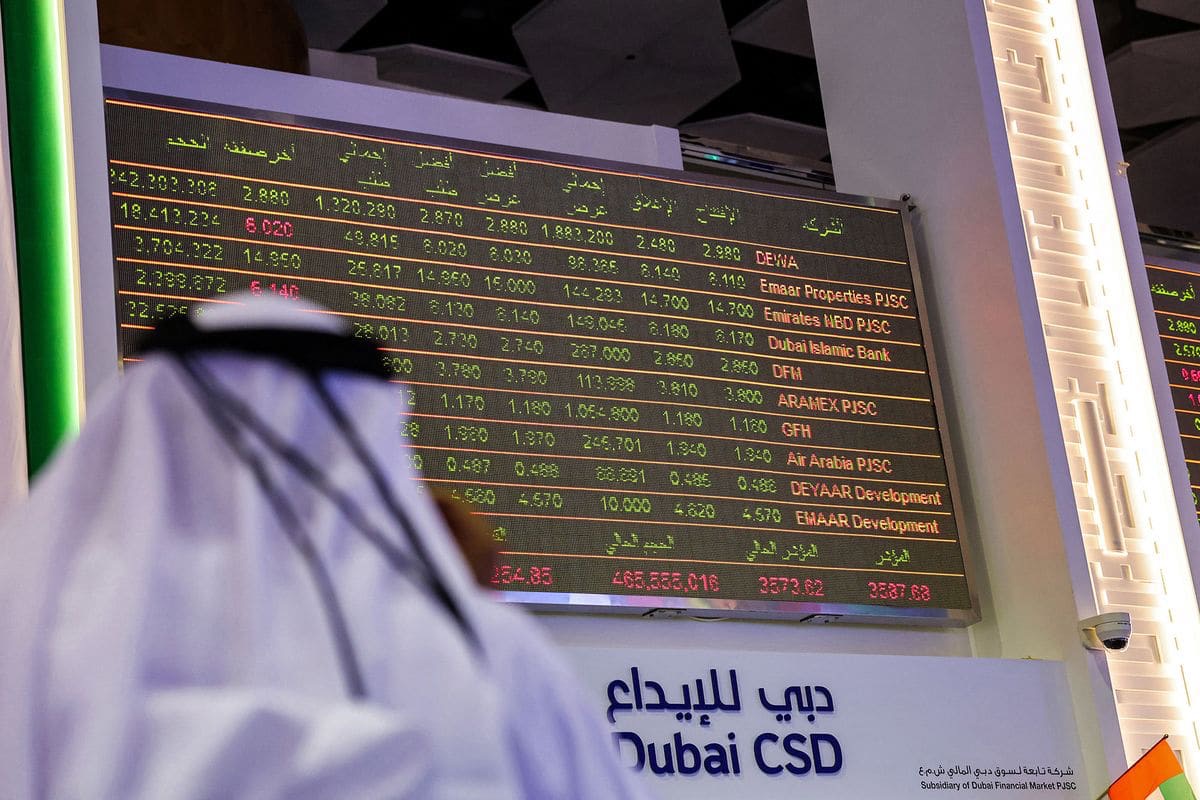
There is a simple test of how much the world trusts a place, and it is whether money keeps arriving when the news turns difficult. By that test Dubai passed. Through a period of regional conflict, when tensions were high and the natural reaction would have been to pause, the city's financial district kept opening new towers and signing new tenants. Global banks and hedge funds continued to expand rather than retreat, and the leasing market barely broke stride.
The numbers make the point more forcefully than any statement could. Prime office rents in the financial hub rose by more than 17 percent in the first quarter of the year, and vacancy fell to just 0.7 percent, a level so tight it is effectively full. New commercial towers came on line with hundreds of thousands of square feet of space, and the largest names in global finance were among those taking it. When rents climb and there is almost nothing left to rent, in the middle of a difficult period, the market is telling you something about confidence.
Why the conflict did not derail it
Market participants describe the impact of the conflict as limited. There was a brief pause as events unfolded, and then activity recovered as tensions eased. One international fund even moved to extend its lease by five years and to add to its presence in the region during the period, which is the opposite of what a firm does when it is losing faith in a location. The behaviour of tenants under stress is a more honest signal than sentiment in calmer times, and here the signal was steady.
- Prime office rents in the financial hub up more than 17 percent in the first quarter.
- Vacancy at just 0.7 percent, effectively full occupancy.
- New towers opening with hundreds of thousands of square feet let to global banks and funds.
- Regional conflict caused only a brief pause before leasing recovered.
- One international fund moved to extend its lease by five years during the period.
- Record company formation in the hub in the prior year, up 28 percent with 1,924 new firms.
What keeps pulling capital in
The draw is structural rather than sentimental. Income earned in the city is untaxed, the time zone sits neatly between the trading days of Asia and Europe, and the location gives direct access to a large pool of regional capital. Add a regulatory environment built to welcome funds and a lifestyle that makes it easy to attract senior people, and the result is a hub that competes with the established financial centres of the world rather than merely serving its own region. Those advantages do not switch off when the news is bad, which is exactly why demand held.
Our reading
Three points stand out. First, resilience under stress is the clearest proof of a hub's maturity, and continuing to grow through a difficult period puts Dubai in a different category from a city riding a calm-weather boom. Second, the combination of rising rents and near-zero vacancy shows demand running well ahead of supply, which tends to pull in yet more construction and yet more tenants over time. Third, the reasons capital comes are durable rather than cyclical, from the tax treatment to the time zone to the access to regional money, and durable advantages are what turn a moment into a franchise. We read the episode as confirmation that Dubai has become a genuine anchor of global finance, one that the market now treats as a base rather than a bet.
Topics