Infrastructure
Al Maktoum International is on track for its 2032 launch
The expansion of Al Maktoum International is moving from groundwork to structure, with the first phase scheduled to open in 2032. Behind the headline date sits a build of rare scale: more than ten million work hours logged in fifteen months, a second runway complete and contracts worth tens of billions of dirhams moving into execution.
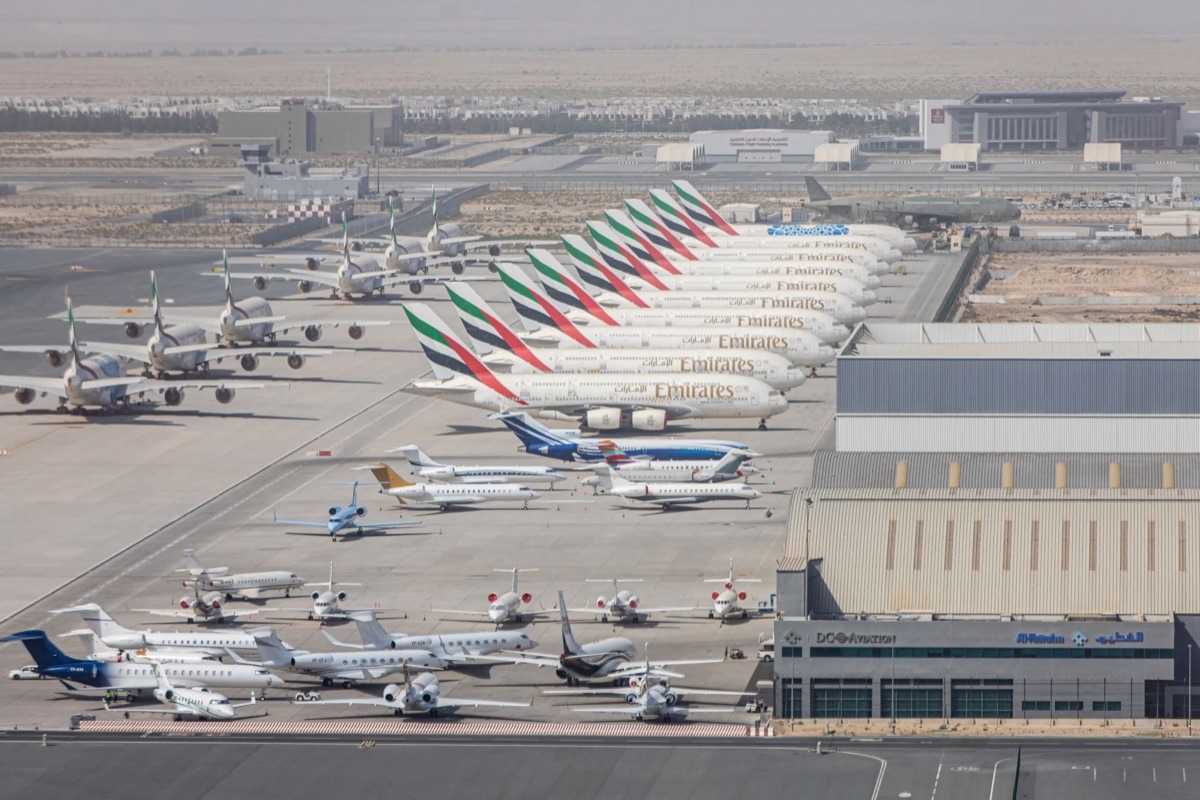
The expansion of Al Maktoum International is now firmly into its build phase, and the first phase remains on schedule to open in 2032. The project has long been described in superlatives, but the numbers coming out of the site are starting to make the scale tangible. This is no longer a masterplan on paper. It is a working construction programme with runways, foundations and structural frameworks already taking shape on the ground.
When the full airport is complete it is designed to handle more than 260 million passengers a year and around 12 million tonnes of air cargo, served by five parallel runways that can operate independently of one another. The layout calls for two passenger terminals, seven concourses and more than 430 aircraft stands. Those figures place it in a category of its own among the world's airports, and they explain why the build is being delivered in phases rather than as a single opening.
What has been built so far
The pace of the past fifteen months is the clearest signal of intent. More than ten million work hours have been logged on site in that window. Crews have installed over 17,000 concrete piles, moved more than 45 million cubic metres of earth in excavation, and poured around 4.5 million cubic metres of concrete. The second runway is complete, and long-span structural frameworks now cover roughly 1.5 million square metres, the skeleton of the terminals and concourses that passengers will eventually move through.
- First phase scheduled to open in 2032.
- Designed for more than 260 million passengers a year at full completion.
- Air cargo capacity of around 12 million tonnes.
- Five parallel runways operating independently, with the second runway already complete.
- Two terminals, seven concourses and more than 430 aircraft stands.
- Over 10 million work hours logged on site in fifteen months.
- More than 17,000 concrete piles, 45 million cubic metres of excavation and 4.5 million cubic metres of concrete.
- Long-span structural frameworks spanning roughly 1.5 million square metres.
The workforce and the contracts behind it
A build of this size is as much a logistics exercise as a construction one. The site currently runs on a workforce of around 9,000, and that number is expected to climb toward 120,000 at peak as the terminals, systems and finishing works ramp up in parallel. Marshalling a workforce of that scale safely and productively is its own engineering problem, and the early hours logged suggest the programme is being managed for sustained throughput rather than short bursts.
On the commercial side, more than AED 7.5 billion in contracts has already been awarded, with around AED 13 billion of work now under way. The next wave is larger still: strategic contracts exceeding AED 55 billion are lined up for the phase ahead, covering the major systems and structures that turn a construction site into a functioning airport. The cadence of these awards is worth watching, because each tranche pulls in a long chain of suppliers, contractors and service providers across the region.
The systems that make it an airport
Beyond runways and terminals, the programme includes the connective infrastructure that a hub of this size depends on. An automated people mover will link the concourses, a baggage handling system will route luggage across the footprint, and dedicated power generation and district cooling plants will keep the site running in the climate. These are the pieces that rarely make headlines but determine whether an airport feels effortless or strained once it is full, and building them in from the start is what distinguishes a planned hub from one that grows by extension.
Why the 2032 date matters
A launch year is not just an operational milestone. It is a fixed point that the wider economy can plan around. The 2032 opening also marks the start of the staged transfer of every flight from Dubai International, a migration scheduled to run through 2035 and to reshape logistics, real estate and the businesses that sit between them. Real estate, logistics, hospitality and the operators around them now have a credible horizon to build toward, and the visible progress on site makes that horizon easier to trust. The difference between a date that slips and one that holds is the difference between speculative positioning and committed investment, and the construction figures so far point toward a programme that is being delivered to schedule.
Our reading
Three things stand out. First, the project has crossed the line from announcement to execution, and the volume of work already completed makes the 2032 target read as a plan rather than an aspiration. Second, the contracting pipeline, from the billions already awarded to the far larger tranche ahead, is a leading indicator for the construction, materials, systems and services sectors that sit downstream of a build this size. Third, the decision to engineer the people mover, baggage and utilities infrastructure in from the outset signals a hub designed to operate well at full capacity, not merely to open. We treat the airport's progress as one of the most consequential infrastructure signals in the region, and we expect its phases to reshape where capital, logistics and talent concentrate over the decade ahead.
Topics