Infrastructure
Dubai to award Dh55 billion more for Al Maktoum Airport
Dubai has already put Dh13 billion in contracts to work on Al Maktoum International Airport this year, and it plans to award another Dh55 billion before the year is out. Between the piling numbers and the automated people mover contract alone, the scale here is hard to overstate.
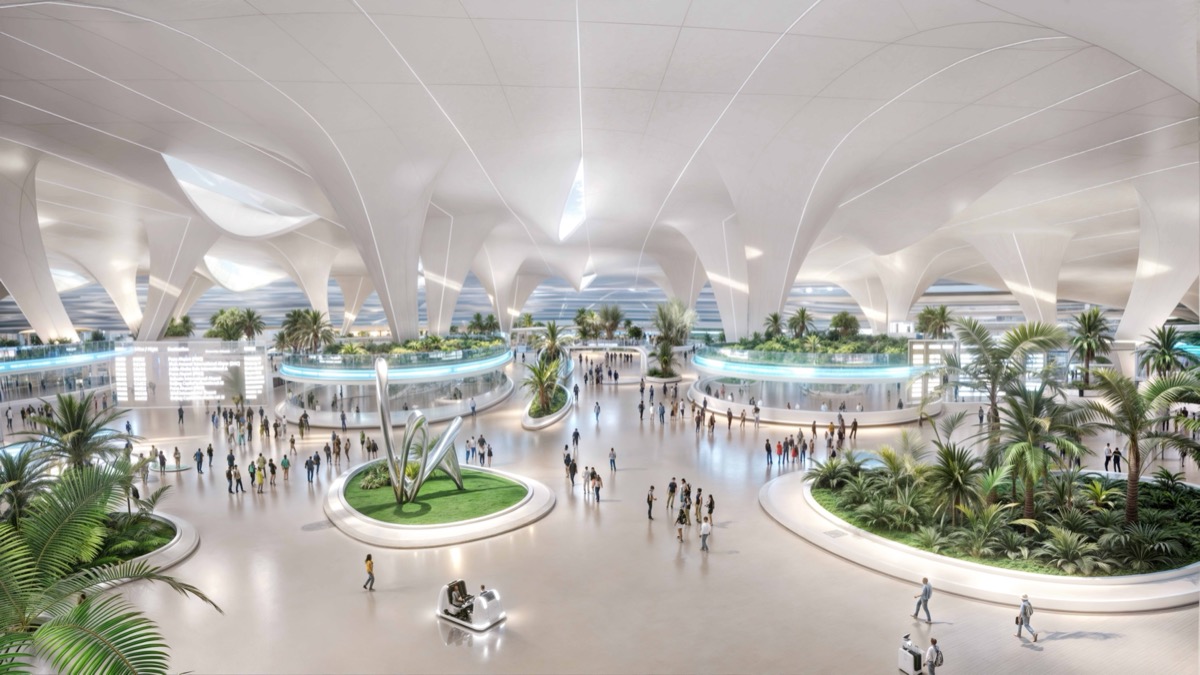
Dubai has already committed Dh13 billion in contracts this year to build out Al Maktoum International Airport, and it is preparing to award a further Dh55 billion, roughly 14.9 billion dollars, before 2026 closes. Those two figures alone put the pace of spending on a single infrastructure project into a category few cities ever reach, and they arrive on top of work that has already been running for more than a year. The airport, once finished, is meant to replace Dubai International as the emirate's primary gateway, and the contract volume moving through the project right now suggests the city is treating that transition as a near term certainty rather than a distant plan.
What has actually been built so far
The construction figures behind the headline numbers are what make the project feel real rather than aspirational. Crews have logged more than 10 million work hours over the past 15 months, driven 17,000 piles into the ground, and moved 45 million cubic metres of earth. Roughly 9,000 workers are on site today, a number the project expects to swell to 120,000 at peak, which on its own would rival the population of a mid sized city. Dubai Airports chief executive Paul Griffiths has been blunt about the intent behind releasing numbers like these mid build, framing the airport as a project already under way rather than a plan still waiting on approval.
- Dh13 billion in contracts already awarded and under execution in 2026.
- A further Dh55 billion, about 14.9 billion dollars, expected to be awarded by year end.
- More than 10 million work hours logged in the past 15 months.
- 17,000 piles installed and 45 million cubic metres of earth moved.
- 9,000 workers on site currently, rising to an expected 120,000 at peak.
- First phase targeted for completion in 2032, with capacity for 150 million passengers a year.
“Al Maktoum International is not some theoretical project, it's actually happening.”
The people mover contract sets the tone
The clearest single signal of how large this project intends to be sits inside one recently awarded contract rather than the headline billions. Mitsubishi Heavy Industries, working alongside its Dubai subsidiary and India's Larsen and Toubro, won the deal to design, build and commission the airport's automated people mover, a driverless train system that will run roughly 50 kilometres and connect nine stations once complete. That length makes it the largest airport people mover system ever built, larger than anything currently operating anywhere in the world, and the contract itself is valued at somewhere between 275 million and 550 million dollars. A single internal transit system of that scale gives a sense of just how far apart the terminals, gates and support facilities across a 70 square kilometre airport city are going to sit from one another.
The scale at full build out
Al Maktoum is being built roughly five times larger than Dubai International, and the total project cost has been put at around 35 billion dollars. The first phase, targeted for 2032, is designed to handle 150 million passengers annually on its own, before the airport eventually scales toward an ultimate capacity of more than 260 million passengers and 12 million tonnes of cargo a year. Airlines are already positioning around that future capacity: Emirates has committed to invest between 10 and 12 billion dollars into the airport, and the introduction of long range narrow body aircraft like the Airbus A321 XLR is expected to let Dubai World Central serve roughly 600 cities directly, widening the airport's reach well beyond what its current wide body dependent network allows.
Our reading
Three things stand out. First, the decision to publicise granular construction figures, piles driven and cubic metres moved rather than just financial totals, is a deliberate signal to contractors, airlines and investors that the project has passed the point where it could be quietly scaled back. Second, awarding a contract for the world's largest airport people mover before most of the terminal structures are finished shows Dubai is designing for the airport's endpoint capacity from day one rather than building in stages that would need retrofitting later. Third, the fact that this expansion continues at this pace despite the regional conflict of the past six months, with construction reportedly unaffected, tells its own story about how insulated large scale Dubai infrastructure spending has become from short term geopolitical shocks. We read the Dh55 billion still to be awarded not as a projection but as a downpayment on an airport that Dubai has already decided will define its next several decades.
Topics